Diagnostic Imaging You Can Trust
Accurate Studies. Clear Results.
Expert Diagnostic Radiologists
Straightforward, Easy‑to‑Understand Reports
Fast Communication With Your Care Team
Imaging Designed to Give You Clear Answers
What it is
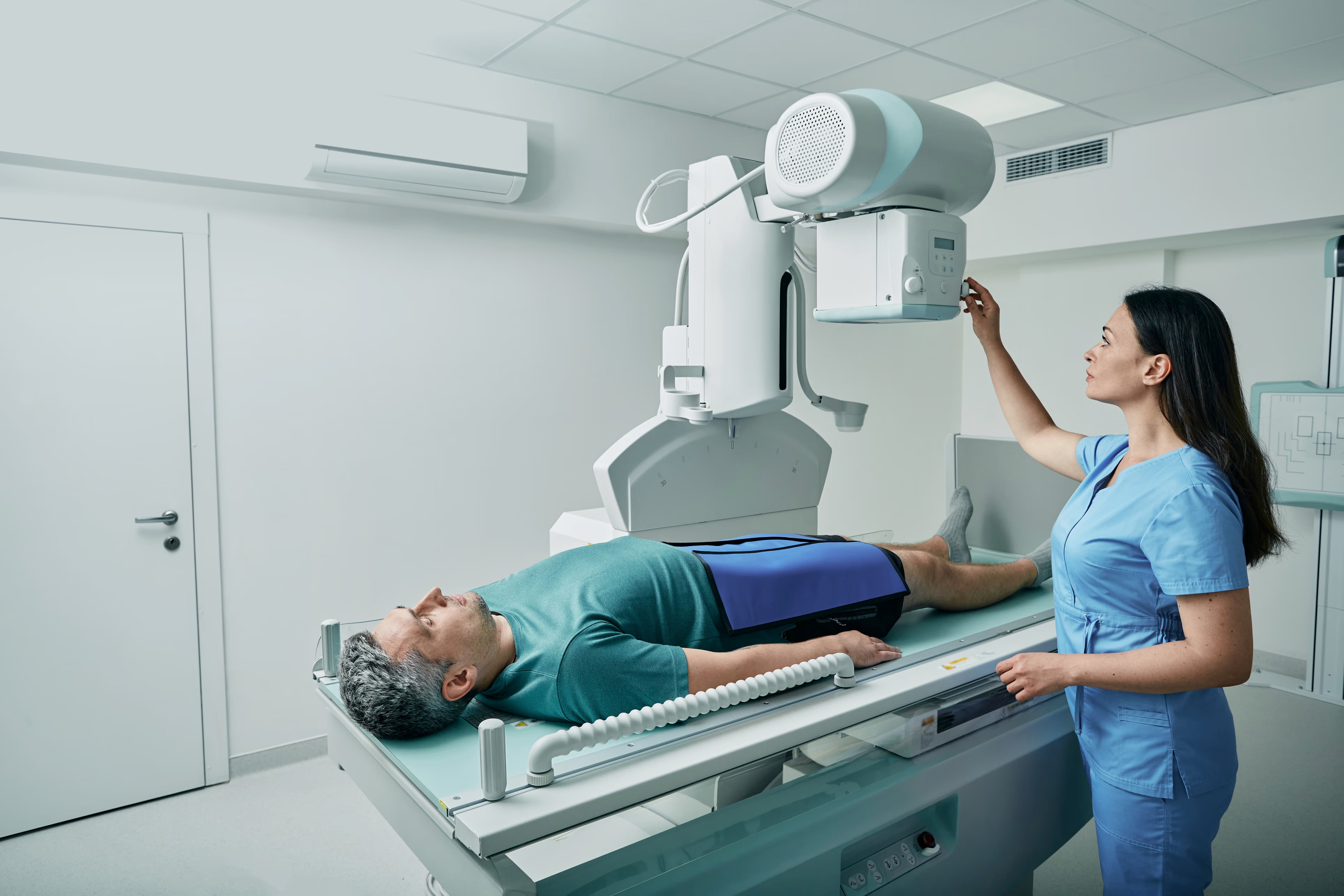
X-rays use a small amount of radiation to take pictures of bones and certain soft tissues.
Why it’s done
They help diagnose fractures, joint problems, chest and abdominal issues, and more.
What to expect
You’ll be positioned by a technologist to capture the needed views. The exam is quick and painless, usually a few minutes.
Prep and safety
Tell us if you are or might be pregnant. Remove metal objects that may block the view. Specific preparation steps will be provided when your appointment is scheduled.
What it is
Ultrasound (sonography) uses high‑frequency sound waves to create real-time images of organs, blood flow, and soft tissues. There is no radiation.
Why it’s done
It helps diagnose pain, swelling, infection, and many conditions in areas like the abdomen, pelvis, thyroid, blood vessels, and muscles. It also guides procedures such as fluid drainage and needle biopsies.
What to expect
You’ll lie on an exam table while a technologist applies a clear gel and moves a small handheld probe (transducer) over the area. You may be asked to change positions or hold your breath for a few seconds to get the best images. Most exams take 15–45 minutes and are painless.
Prep and safety
Preparation varies by study. Some exams may require a full bladder or fasting, while others need no prep. Ultrasound is safe during pregnancy and for people of all ages. Please tell us about any symptoms, prior surgeries, or implanted devices. Specific preparation steps will be provided when your appointment is scheduled.
What it is
CT uses X-rays and a computer to create detailed cross-sectional images of the body. Contrast dye may be used to better see organs and blood vessels.
Why it’s done
It helps evaluate injuries, infections, tumors, blood clots, and many other conditions.
What to expect
You lie on a table that moves through a donut-shaped scanner. If contrast is used, it may be given by mouth or IV and can cause a warm feeling. Most scans take 5–15 minutes.
Prep and safety
Tell us about allergies, kidney problems, and medications, especially metformin. Inform us if you are pregnant. Specific preparation steps will be provided when your appointment is scheduled.
What it is
MRI uses a strong magnet and radio waves to make detailed images of the body without radiation. Sometimes contrast is given by IV.
Why it’s done
It shows soft tissues like the brain, spine, joints, and organs with excellent detail to diagnose many conditions.
What to expect
You’ll lie still in the scanner and hear tapping sounds. Ear protection is provided. If you have claustrophobia, options can help you stay comfortable. Exams usually last 20–45 minutes.
Prep and safety
Tell us about any implants, pacemakers, metal fragments, or kidney issues. Remove metal objects. Specific preparation steps will be provided when your appointment is scheduled.
What it is
Nuclear medicine uses small amounts of radioactive tracers to show how organs and tissues are working, not just how they look.
Why it’s done
It helps diagnose heart disease, bone problems, thyroid disorders, infections, and certain cancers.
What to expect
A tracer is given by IV, by mouth, or by inhalation. Images are taken with a special camera after a short wait. Timing varies by test and can range from minutes to a few hours.
Prep and safety
Radiation doses are low and leave the body over time. Tell us if you are pregnant or breastfeeding. Specific preparation steps will be provided when your appointment is scheduled.
What it is
DEXA is a low-dose X-ray that measures bone strength, most often at the hip and spine.
Why it’s done
It helps diagnose osteoporosis and estimate fracture risk, guiding treatment and lifestyle changes.
What to expect
You lie on a padded table while a scanning arm passes over you. The test is painless and usually takes 10–15 minutes.
Prep and safety
Avoid calcium supplements for 24 hours before the test unless told otherwise. Tell us if you recently had a test with contrast or nuclear medicine. Specific preparation steps will be provided when your appointment is scheduled.

Our Providers
Find a Location